
Topics included new exotic species, mosquitoes, pollinators, carpenter ants, etc.
The Conversation: Why we still collect butterflies
This is a nicely written and very informative article on the importance of collecting.
https://theconversation.com/why-we-still-collect-butterflies-41485
Defoliation of spruce by aphids around Kachemak Bay
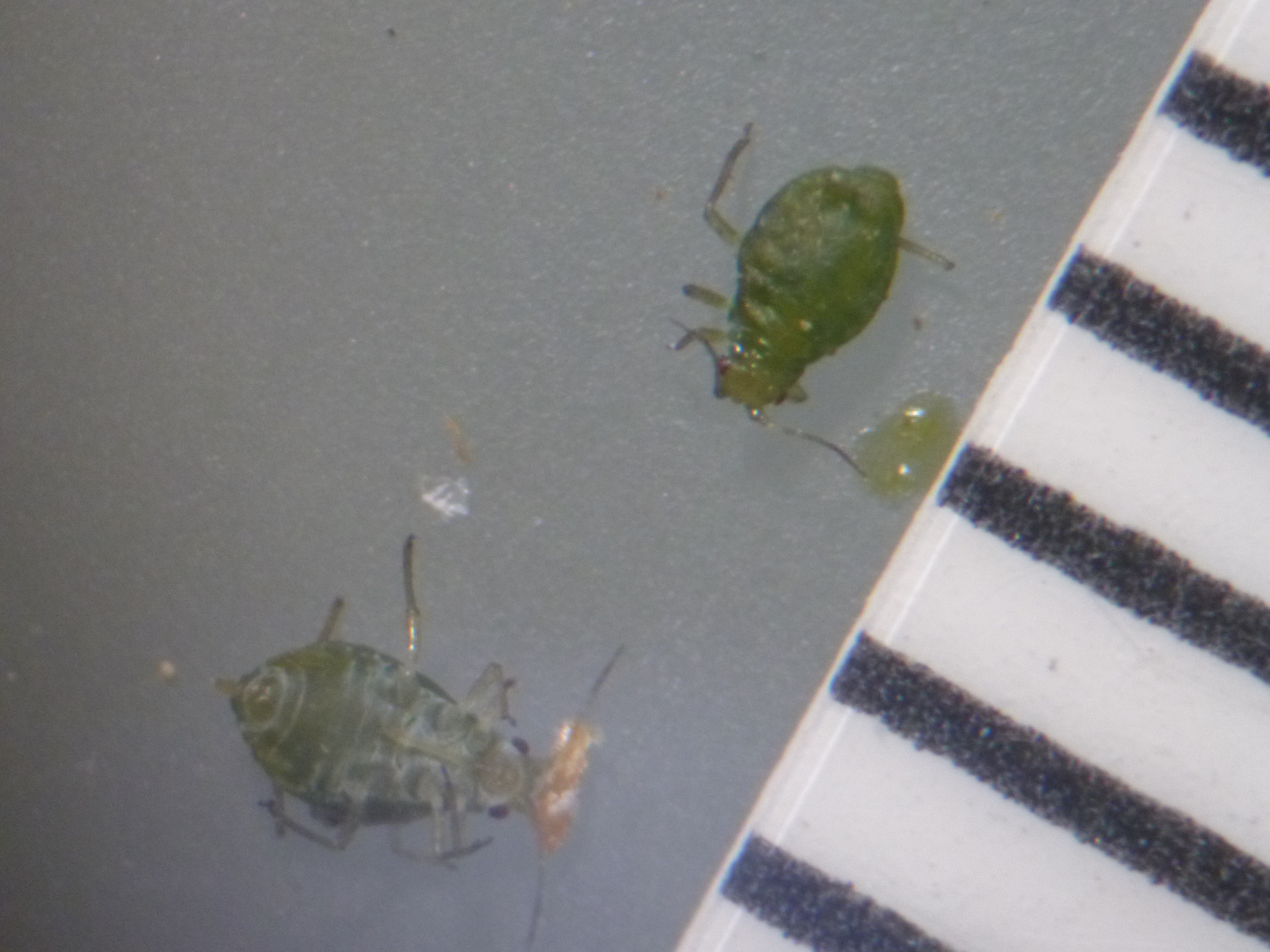
Aphids from spruce at the Homer Bench, 12.June.2015. Photo courtesy of Karin Sonnen (USDA NRCS, Homer).
Mitch Michaud (USDA NRCS, Kenai), phoned me regarding substantial defoliation of spruce at Halibut Cove and the Homer bench. At Halibut Cove, spruces had been dropping many needles.
Aphids were the culprit, but the identity of the aphids has not yet been established.

Browning spruce needles due to aphid infestation, 9.June.2015.
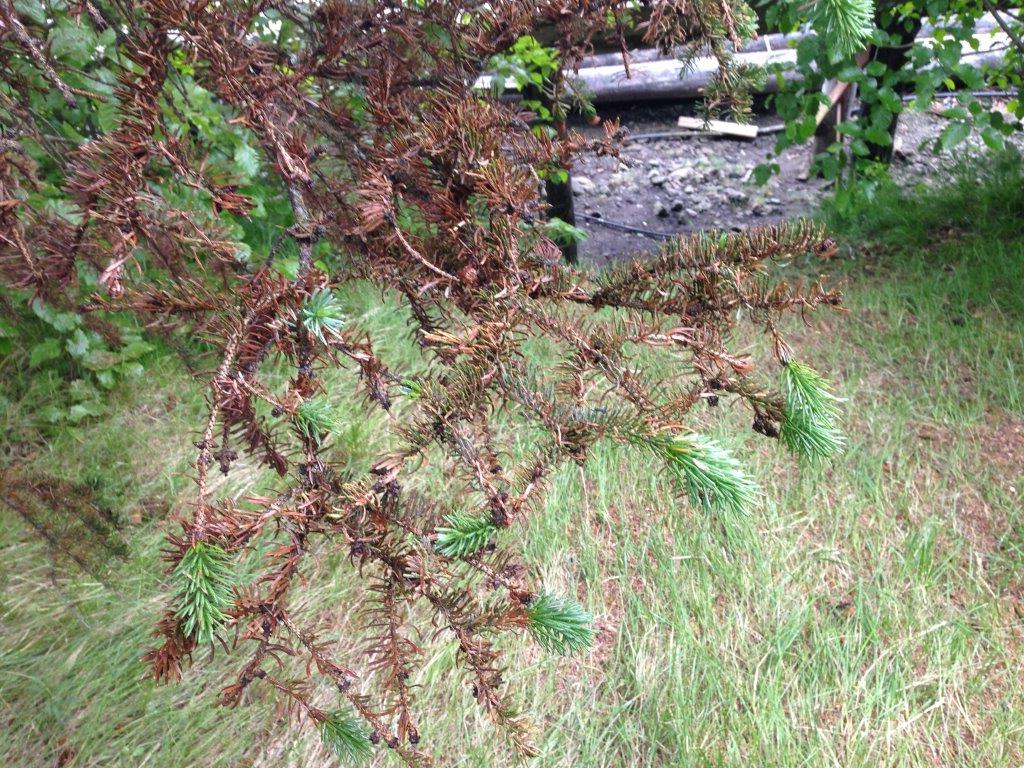
Browning of spruce needles.
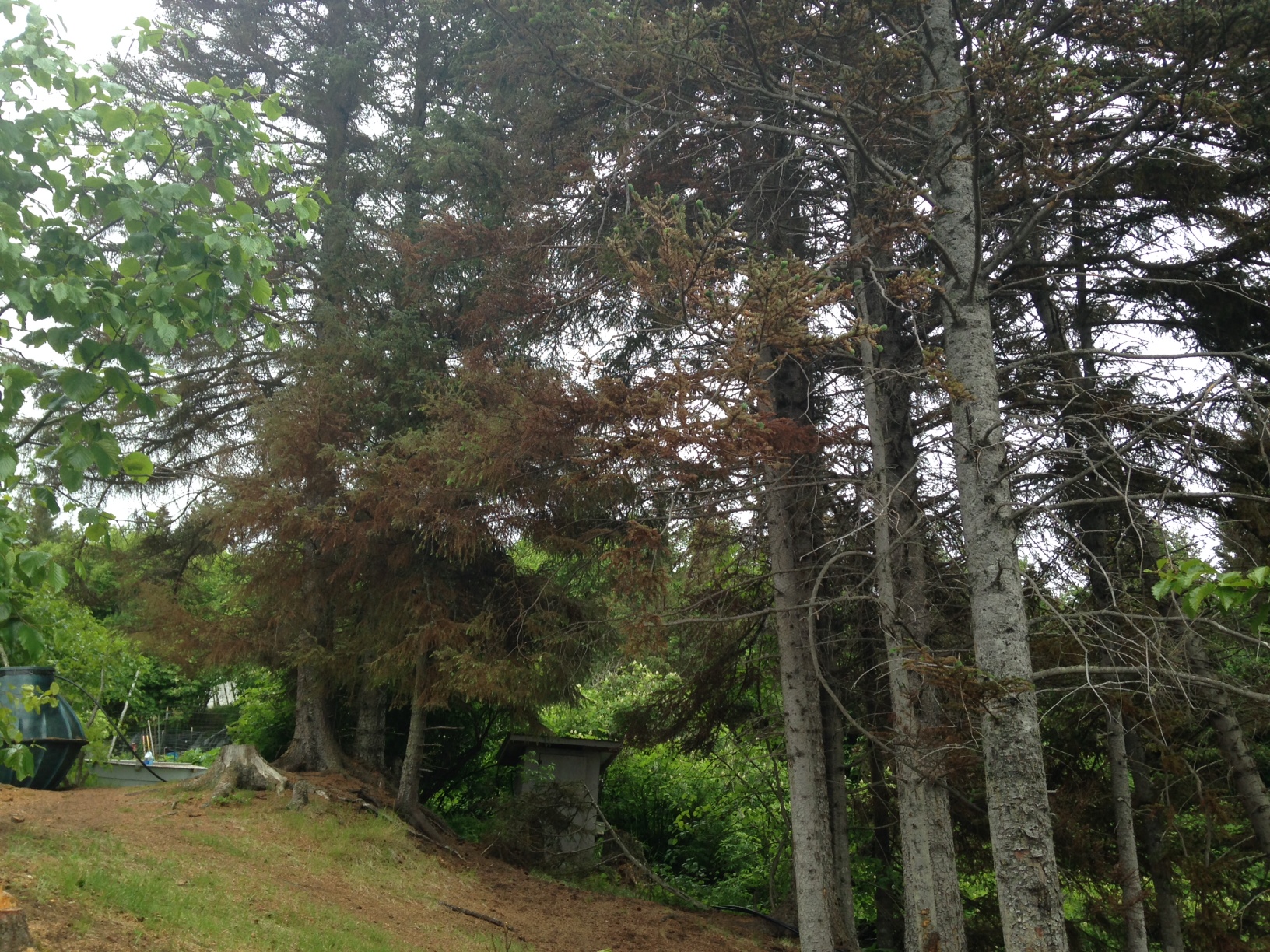
Spruce trees damaged by aphids, 9.June.2015.
Alder (Alnus incana tenuifolia) mortality agent complex effects on riparian zone habitat

Distribution of alder dieback mapped during 2011 Aerial Detection Survey.
The report including this chapter was published in May 2015.
Citation:
Kruse J.J., L. Winton, N. Lisuzzo, G. Adams, K. Zogas, and S. Swenson. 2015. Alder (Alnus incana tenuifolia) mortality agent complex effects on riparian zone habitat. pp. 187-195 in Potter, K. M. and B.L. Conkling, eds. Forest health monitoring: national status, trends, and analysis 2013. General Technical Report SRS-207. U.S. Department of Agriculture Forest Service, Southern Research Station, Asheville North Carolina. http://www.srs.fs.usda.gov/pubs/48361
Large Aspen Tortrix Activity in the Fairbank’s Area
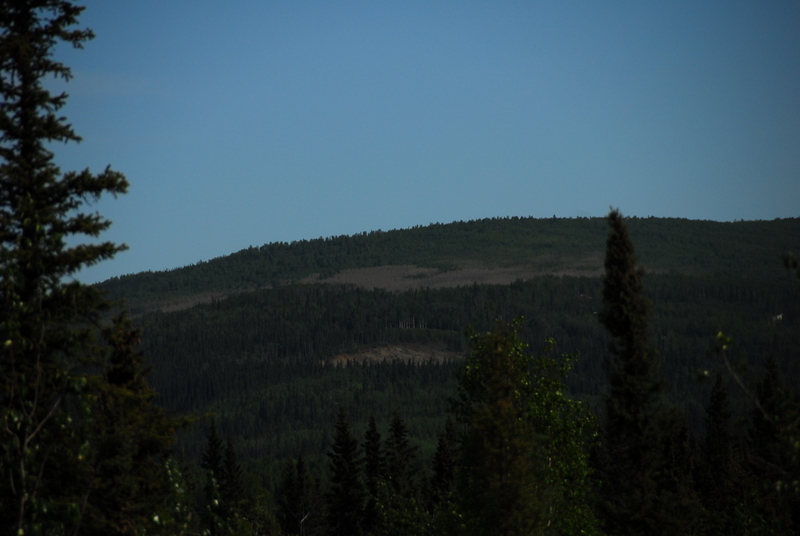
A large stand of defoliated aspen visible from across the valley.
In the last two weeks there have been numerous reports of aspen defoliation in the Goldstream Valley on the north side of Fairbanks. An area approximately 50 acres in size has been heavily defoliated by the caterpillar, large aspen tortrix (Choristoneura conflictana (Walker)). Brief, intense outbreaks are common throughout the range of aspen, and typically last 2-3 years before collapsing. These outbreaks can grow to cover thousands of acres. The larvae tie together leaves with webbing and feed on the plant tissue. They will web other species of plants and feed on them if they run out of available aspen foliage. Although the forest can look very grim, leafless and covered in webbing, the trees will often create a second flush of leaves later in the summer. Historically there has been little long-term damage to the aspen trees associated with past outbreaks.

The aspen were completely defoliated shortly after bud break by the large aspen tortrix.
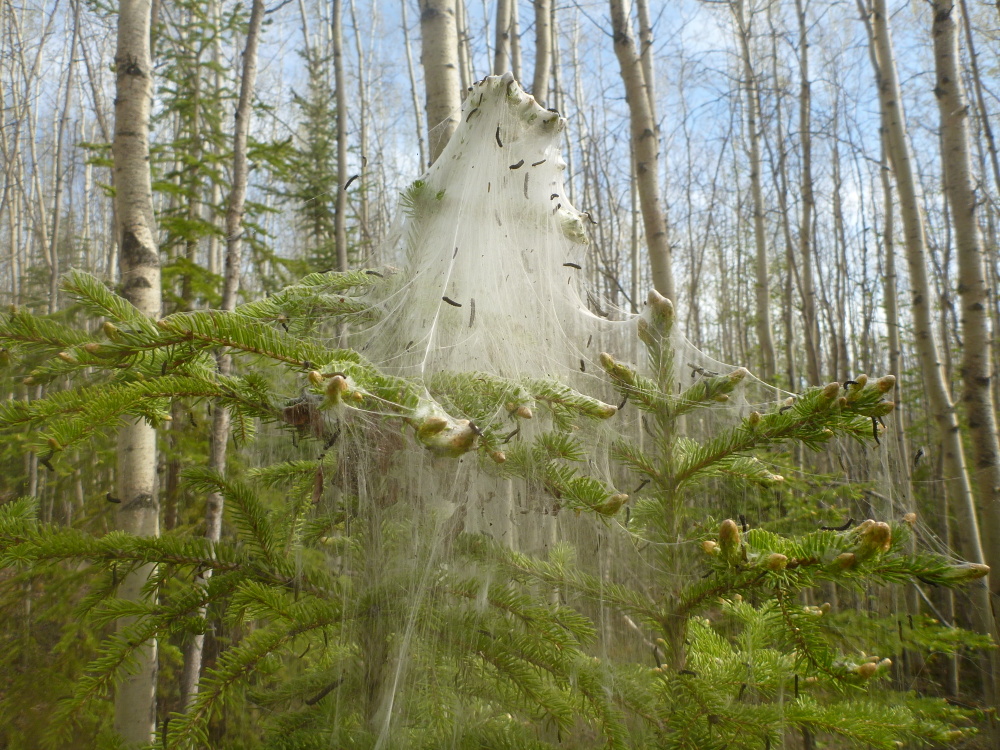
With few aspen leaves left to feed on, the larvae have been descending from the canopy and webbing understory vegetation to feed upon, including spruce, alder, birch, and roses.
First New World Record of Paradelphacodes paludosus (Flor 1861) (Hemiptera: Fulgoroidea : Delphacidae) in Alaska
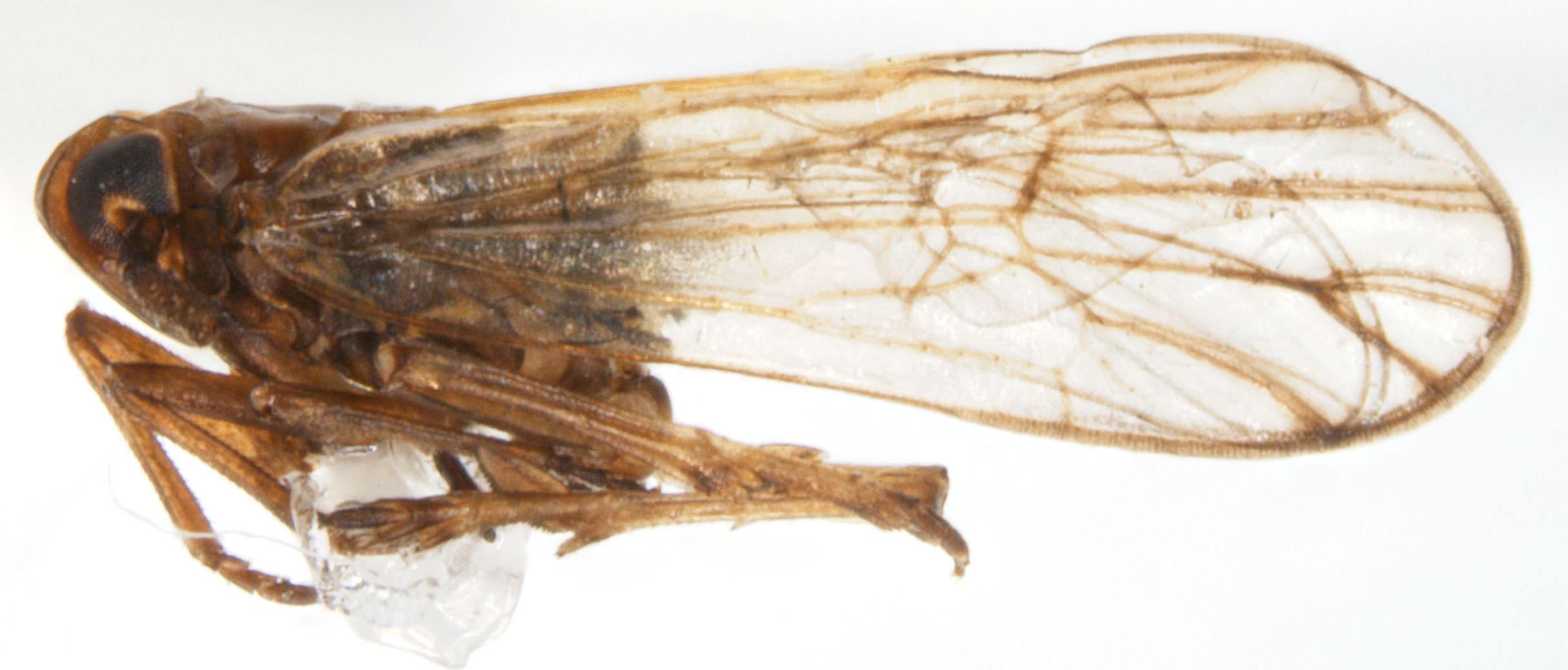
UAM:Ento:164292, lateral view. Media details: http://arctos.database.museum/media/10430146
The article appeared in this month’s issue of Entomological News, available at the URI below.
http://dx.doi.org/10.3157/021.124.0511
Citation:
Charles R. Bartlett, Stephen W. Wilson, Derek S. Sikes. 2015. First New World Record of Paradelphacodes paludosus (Flor 1861) (Hemiptera: Fulgoroidea : Delphacidae) in Alaska. Entomological News 124(5):370-372.
Specimen record:
http://arctos.database.museum/guid/UAM:Ento:164292
Job announcement: Entomologist (Fairbanks)
See the job announcement at the URI below. It closes on April 6.
ADN: With arrival on Kenai Peninsula, cluster flies make first Alaska appearance
2015 AKES Newsletter posted
The March 2015 Newsletter of the Alaska Entomological Society is now available at the URI below.
http://www.akentsoc.org/doc/AKES_newsletter_2015_I.pdf
 In this issue:
- First record of a cluster fly (Calliphoridae: Pollenia) in Alaska
- What is a specimen? What should we count and report when managing an entomology collection?
- Moths land on Murkowski’s desk—Senate Resolution 70
- Two new Lepidoptera host plant relationships
- The DNA barcoding UAMU Project: Testing the insect identification power of DNA barcoding technology
- Review of the eighth annual meeting
ADN: Will Alaska’s weird winter be followed by equally strange summer?
The article (URI below) includes interviews with Glenn Juday and Derek Sikes about forest insects, mosquitoes, and yellow jackets.
http://www.adn.com/article/20150322/will-alaskas-weird-winter-be-followed-equally-strange-summer